Blog

Does your property have an Energy Performance Certificate?

If you want to advertise a property for let in Edinburgh, or anywhere in Scotland, you’re required by law to have an Energy Performance Certificate. These do exactly what they say on the tin; they’re an assessment of the energy efficiency of your property, giving the property a rating of A (very efficient) to G (not efficient). As well as a rating of the energy efficiency of the property, an EPC will also include recommendations on improvements you can make to increase the efficiency.

The Scottish EPC Register

We regularly hear from landlords who think that they once had these, but can’t find the paperwork. Thankfully, there’s a simple solution out there on the interweb. Since 2008 all properties sold in Scotland have had a Home Report, which includes an Energy Performance Certificate. To find out if an EPC already exists for your property you can check the Scottish EPC Register. This is the central register for EPCs in Scotland, and you can easily search for EPCs by postcode.

When should you renew your EPC?

As EPCs haven’t been around for long, if there’s already an EPC for your property you should still be able to use this until the ten years is up. However, you might want to refresh the EPC if significant changes have been made to a property. We recently visited a property in Morningside that had an EPC with an F rating. However, the landlord had recently fitted a nice new shiny combi boiler, central heating throughout and double glazing. The EPC rating went from an F to a high C, making the property much more attractive to potential tenants.

Energy Performance Certificate Edinburgh

If you’ve checked the Scottish EPC Register, and your property doesn’t have an EPC, we can help. To arrange an appointment for an EPC for your property just click here, or email us at info@legionellaedinburgh.com


Posted on

Favourite finds – March 2017

They do say every day’s a school day – here’s some of our favourite finds from March 2017

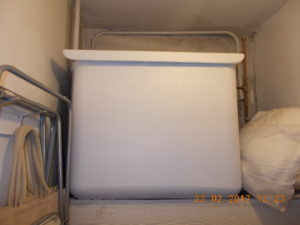
The Asbestos Cold Water Tank

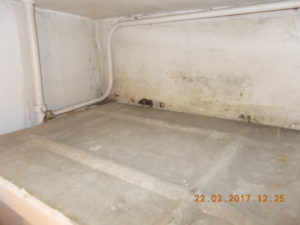
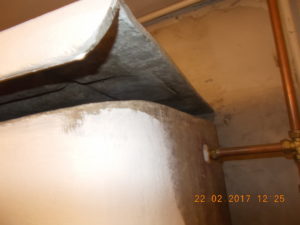
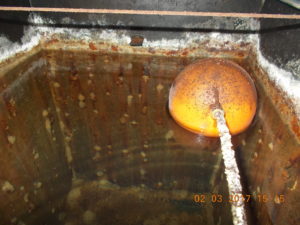
We’ve heard of these, but this was the first time we’d met an asbestos cold water tank in the flesh. Sitting quietly in a cupboard in a basement flat in Canonmills was this beast. While an asbestos water tank isn’t immediately dangerous, the tank was very old and doesn’t meet the current plumbing standards, so we’ve recommended to the landlord that they remove this and replace it with a plastic cold water storage tank.


The rusty cold water tank

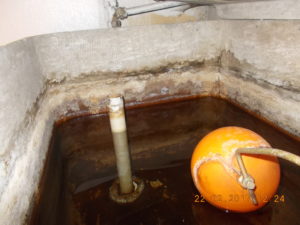
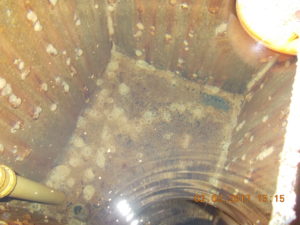
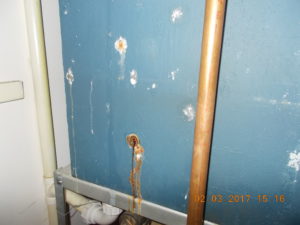
We still occasionally find old metal cold water tanks, which are normally heavily rusted. But this one definitely takes the biscuit. You can see from the photos below that it’s so heavily rusted small leaks are starting to develop on the outside. It’s only a matter of time before this tank bursts, causing a significant leak in the property. Another tank to be replaced!

The feature fireplace

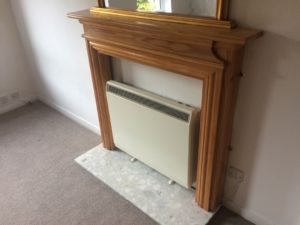
We visit a lot of properties, with all manner of quirks and interesting features. But this is definitely our most recent favourite. Rather than the bog standard Victorian feature fireplaces we see across Edinburgh, this property has a lovely feature storage heater.

What interesting sights have you seen this month? Send your best pictures to info@legionellaedinburgh.com and we’ll share them in our next newsletter!

Posted on

Spring Update

It’s been a busy start to 2017 here at Legionella Edinburgh. We were back to business with a bang in January, carrying out legionella risk assessments, PAT testing, energy performance certificates and our other compliance services in Edinburgh, the Borders, Perth, Dundee and Fife. At the end of January we celebrated our two year anniversary. It’s hard to believe it’s been two years since we started offering legionella risk assessments and other services to the good landlords and letting agents of Edinburgh and beyond – time flies when you’re having fun!

Educational seminar with Envirovent

In February we hosted a well attended educational seminar for letting agents with our friends at Envirovent. We presented a session on legionella awareness, and Envirovent delivered a session on damp and mould, and how their products can help with these. We’re aware that there’s a real lack of regular training events for letting agents, particularly in Edinburgh. We intend to deliver educational events like this on a more regular basis. We’ll keep clients updated on this as plans develop, but to ensure you’re on our invite list for future events just drop us a line at info@legionellaedinburgh.com.

Cold water tank cleaning and remedial plumbing works

We’ve also been working to develop the range of services we can help with. At present we offer legionella risk assessments, portable appliance testing and EPCs in house. In partnership with key suppliers we also offer gas safety checks, EICRs, installation of mains smoke and heat alarms and other electrical works. We are currently exploring options with a local company to offer remedial plumbing works following legionella risk assessments, including cleaning of cold water tanks. We’re aware that finding tradesmen willing to carry out these works for a reasonable price has been a real sticking point for landlords and letting agents, and we’re keen to help solve this problem. If this is something that you would be interested in finding out more about please just let us know.

Letting Agent meetup – coming soon

In April we are planning on launching a monthly meetup event for letting agents; part social event, part industry networking and updates. Watch this space for more info.


Posted on

The definitive guide to legally required certificates and safety checks for Scottish landlords

2015 was a great year to be a landlord. Despite us all thinking a Tory government would mean we could rest easy for another five years, the recent Budgets have significantly changed the tax situation of buy-to-let landlords. And it hasn’t been good news. But that’s not what we’re here to talk about today.

I speak to landlords and letting agents all the time, and every day I meet people who are confused or unsure about the legally required certificates and safety checks that are needed to rent a property out here in sunny Edinburgh. Given how many of these have changed even in the last few years, this doesn’t come as a surprise. Chances are, unless you’re dealing with HMOs and have a council official checking your property every year, a few of these changes might have passed you by.

So to help the good landlords of Edinburgh and beyond (and a fair few of the letting agents), here’s the full list of checks and certificates you need to be legal, and how often you need to get them done.

  1. Legionella risk assessment

If you’re a landlord in Edinburgh, or for that matter anywhere in the UK, you’re now required under the Health and Safety at Work Act to carry out a legionella risk assessment on your property, and to manage the risk to your tenants from legionella. Best practice is for risk assessments to be reviewed on an annual basis unless the risk assessor recommends otherwise. Legionella risk assessments for landlords and letting agents are our bread and butter here at Legionella Edinburgh, so if you’ve got any questions about this feel free to give us a call.

  1. Landlord’s Gas Safety Certificate

If you’ve got a gas appliance in your property, you need a Gas Safe registered engineer to check that it is safe to use, and give you a Gas Safety Certificate. While you’ve got them there, it makes sense to get your gas appliances serviced as well. This should prolong their working life, and help prevent those late night calls about the boiler not working. The Gas Safety Certificate has to be renewed on an annual basis.

  1. Carbon Monoxide Alarms

The official Scottish Government guidance on CO alarms has now been released, and thankfully long life battery operated CO alarms are sufficient – I for one was worried I’d be calling out my electrician again to fit mains wired CO alarms. You now need one CO alarm in every room with a gas appliance, excluding gas appliances for cooking. So if you’ve just got a gas hob in the kitchen, you won’t need an alarm there, but if the boiler is hiding behind a kitchen cupboard, you will. In practice, this means most properties will need a CO alarm by the boiler, and by the gas fire if you’ve got one. You’ll also need a CO alarm in any bedroom or living room that has a flue running through it. Be sure to check when the alarms expire so that you know when to replace them, and also make sure you buy sealed CO alarms where the battery can’t be tampered with – if it comes with two AA batteries in the pack, you’ve got the wrong type.

  1. Fire Alarms

[Edit – from March 2019 either mains wired alarms or tamper proof long life lithium ion battery alarms can be fitted to meet the Repairing Standard]

While we’re on the subject of alarms, the guidance on mains wired smoke alarms changed back in 2013. When we say guidance, we mean the legal requirement under the Repairing Standard to provide adequate provision for the detection of fire in a property. You are now required to have a mains wired smoke alarm in every circulation space (or hallways as us laypeople call them), in the living room of the property, and a heat detector in the kitchen. If your property is on more than one level, you’ll need a smoke alarm in the hallway on each level. All these alarms need to be interlinked so if one goes off, they all go off. It’s not quite at the level of HMOs, which need alarms in every single room, but it’s quite a change for people still relying on battery smoke alarms. There’s no formal date by which you have to comply with the guidance, but if you had a fire and hadn’t done anything since the change in 2013 (or even since mains wired smoke alarms were first required in 2007) I wouldn’t want to be in your shoes. Again, mains wired fire alarms do expire so check the dates on your alarms so you know when these need replaced.

  1. Electrical Safety – EICR

Let’s get the easy bit out the way first. From December 2015, you need an Electrical Installation Condition Report (EICR) for all new tenancies. This is a check of the fixed wiring in your property, and lasts for five years, or less if the electrician who carries it out feels it needs to be renewed more frequently (which is a subtle way of telling you to do some rewiring). By December 2016, you’ll need an EICR for all rented properties, new tenancies or not. In fairness, it’s long been best practice to have an EICR carried out on rented properties (or PIRs as they used to be known). The new legislation and changes to the Repairing Standard, introduced in the Housing (Scotland) Act 2014, just makes this a legal requirement.

  1. Portable Appliance Testing – PAT Testing

Along with the EICR, you’re now legally required to have PAT testing carried out on any electrical appliances you provide in your property. If you’re not sure what needs to be PAT tested, check the end of the cable and if you find a plug there, it needs tested. This includes fridge freezers, ovens, hobs and other white goods, so don’t be thinking that you don’t need to carry out PAT testing as you don’t provide lamps, kettles and toasters to your tenants.

The guidance on PAT testing isn’t quite as clear as it could be. It states that you have to carry out PAT testing along with an EICR, ie every five years. However, because many landlords and letting agents (including us here at Legionella Edinburgh) have taken the time to carry out training so they can carry out PAT testing, PAT testing doesn’t have to be carried out by your electrician when they carry out the EICR. Any competent person can carry out PAT testing. Furthermore, the accepted rule of thumb has long been that PAT testing should be carried out annually, but this hasn’t been cemented in the guidance; as long as you get it done every five years you’re probably keeping within the law. Annual PAT testing is still the best practice recommendation of the landlord associations however.

  1. Energy Performance Certificates

If memory serves these became a legal requirement back in 2009, and everyone moaned about this then. However, they do last for ten years, and every property bought in the last few years will have come with one as part of the Home Report. It’s a legal requirement to include the Energy Rating of your property on any advert and display a copy of the Certificate in the property, so no letting agent will advertise your property without this.

Oh, and finally – don’t forget to fit a fire blanket in the kitchen of your property. It’s not a legal requirement, but it’s a lot cheaper than dealing with a charred kitchen.

Hopefully you’ve found this article informative and useful. Here at Legionella Edinburgh we and our trusted contractors can provide you with the full list of legally required certificates and safety checks. If you’d like us to help just call 0131 210 0054 or email info@legionellaedinburgh.com

Kevin Dempsey

Links

https://www.prhpscotland.gov.uk/repairs-application-and-guidance – This page includes links to the Scottish Government’s guidance on fire alarms, carbon monoxide alarms and electrical installations and appliances

http://www.gov.scot/Topics/Built-Environment/Housing/BuyingSelling/Home-Report/epcs – details on Energy Performance Certificates

http://www.hse.gov.uk/legionnaires/legionella-landlords-responsibilities.htm – details of what landlords have to do about legionella

http://www.gassaferegister.co.uk/advice/renting_a_property/for_landlords.aspx – details of what landlords have to do about gas safety

Posted on

3 reasons why landlords need to carry out legionella risk management

With the growing list of health and safety legislation affecting rented properties, it’s no wonder that landlords and letting agents eyes glaze over when I start talking about legionella. I’m a landlord myself, and sometimes it feels like there’s a never ending list of new safety checks that have to be carried out and of course paid for from ever dwindling profits. In this article I’m hopefully going to show why legionella risk management is an important part of making sure your property is safe to be rented out to tenants.

Reason 1 – Legionnaires disease makes people ill, and kills people every year

All joking aside, legionnaires disease isn’t a pleasant thing to catch. Although the number of cases of the disease diagnosed each year aren’t huge (around 300 a year), it is believed that thousands of people are made sick by legionella bacteria, but don’t seek medical treatment. For most people the disease can be treated with antibiotics, but for some it can be fatal, particularly those with pre-existing health conditions. The 2012 outbreak of legionnaires disease in Edinburgh killed four people, hospitalised forty five and made thousands of people ill. While the source of this outbreak obviously wasn’t a domestic property, it shows how dangerous the disease can be. Apparently, most people have had the disease a couple of times in their lives. Often people return from holiday and hop into the shower to clean off after travelling, without flushing the water system in their house that’s full of warm, stagnant water packed with legionella bacteria. Lo and behold, they spend the next few days feeling full of the flu, which is most likely actually legionnaires disease.

Reason 2 – cold water tanks in rented properties are normally filthy

Spot the plasterboard lying in this rusty tank!

Spot the plasterboard lying in this rusty tank!

Another beautiful example of the condition of tanks we find!

Another beautiful example of the condition of tanks we find!

Does your property have a cold water tank? Here in Edinburgh, we generally find around 40% of the properties we carry out legionella risk assessments at still have cold water tanks. While we’ve not found one yet with a dead pigeon floating in the water, we’ve also yet to find one that doesn’t need cleaned. The current Scottish water regulations require cold water tanks to be made from a non-corrosive material, have a tight fitting lid and be insulated so that the water temperatures can’t rise to a point where legionella bacteria can multiply. They’re also required to have the inlet and outlet pipes on opposite sides of the tank to ensure a flow of water in the tank. As you’ll see from the photos above, most tanks need both cleaned and disinfected, and require remedial works to them to bring them up to standard. Would you want to brush your teeth with water from a tank that looks like this?

Reason 3 – It’s the law

Landlords have a legal duty to ensure that the risk of exposure of tenants to legionella is properly assessed and controlled. Your opinion on whether legionella is a legitimate concern in your property is irrelevant. You still need to carry out legionella risk management on all rented properties, just as you have to have an annual gas safety check, and soon will have to carry out a check of the electrical installation every five years.

Hopefully this article will have convinced you that legionella risk management isn’t a ridiculous, unnecessary burden for landlords created by health and safety bureaucrats with too much time on their hands, and is actually a genuine requirement to ensure that the property you rent out to your tenants is safe. If you’d like to know more or to book a legionella training session don’t hesitate to contact us, we’ll be happy to help.

Posted on

Training, training and raining in May

May has been a busy month here at Legionella Edinburgh. Despite the cold and miserable weather we’ve been having, we’ve had a fantastic time meeting with a number of new letting agent clients both in Edinburgh and further afield. But the most rewarding parts of our month have been the legionella risk management training sessions we’ve held with our new clients.

Inevitably, the letting agents we deal with all know a bit about legionella. They’ve read articles in landlord magazines, heard a bit about it at conferences, and understand that there’s now a legal duty on landlords to do something about legionella. However, with the dearth of good quality information out there, when we meet them they’re normally pretty confused about what they actually need to do about legionella.

That’s where we’ve been coming in. At our training sessions, we cover everything our clients need to know to ensure that they and their landlords are meeting their legal duty. Most importantly, by the end of the session they understand what they need to do on an ongoing basis to manage the risk from legionella. We explain that the risk assessment we carry out on each property is only the first step, and take them through our six steps of legionella risk management. By the end of the session we leave our clients confident that they can explain this new area to their landlords. We were delighted when one of the attendees recently said that after our session they felt much happier about legionella – they’d thought introducing this to their properties was going to be a nightmare, but now realised it wasn’t so bad. Music to our ears!

The sessions are aimed at property managers and senior members of the company, and can be delivered in person, or via Skype. And because we understand how much people enjoy hearing about health and safety, we always try to bring donuts! If you’d like to arrange a free legionella training session for your letting agency, or would like to know more about this service, don’t hesitate to pick up the phone or email us at info@legionellaedinburgh.com.

Posted on

Beware the legionella cowboys!

I’ve got a guilty secret; I’m a country music fan. I even travelled to London earlier this year to spend a whole weekend at C2C 2015, a huge country music festival held each year at the O2 Arena. So I think it’s safe to say I know a thing or two about cowboys.

Sadly as with every industry, there’s cowboys amongst legionella companies, and often they’ve got big marketing budgets. Unfortunately for landlords and letting agents, these cowboys don’t wear big hats, so aren’t always easy to spot. And with a generally low level of knowledge and understanding about legionella in the private rented sector, a lot of these cowboys have been successfully scamming people.

The main way they’ve been doing this is by recommending expensive legionella testing for domestic properties. This involves taking water samples at a property and having them analysed at a lab to see if legionella bacteria is present. Funnily enough, a lot of these tests come back positive, and expensive cleaning works get recommended. Legionella testing is quite a common and legitimate practice in big commercial properties, but the only time you’d need to do this in a domestic property is if it wasn’t connected to the mains water system, and had it’s own water source. There’s not a lot of properties in Edinburgh that fit this description!

This month the Health and Safety Executive have sought to clear things up. Their Myth Busters team have presented a Panel Opinion that makes it clear that consultants and letting agents requiring landlords to pay for legionella testing are scaremongering for commercial gain, and exaggerating the legal requirements for landlords to manage and control legionella in domestic premises.

Now, this shouldn’t be misunderstood – it doesn’t mean that landlords have to do nothing about legionella. Legionella testing should not be confused with a risk assessment. It’s essential to carry out a risk assessment of every rented property, in order to identify any issues in the property which could enable legionella bacteria to multiply. But don’t be misled into believing you need unnecessary services like testing.

Here at Legionella Edinburgh we’re delighted to see the HSE come out and unmask the cowboys. We routinely carry out free legionella training sessions around Edinburgh and further afield with letting agents to help them understand legionella risk management. If you’re worried you’ve been caught out by cowboys, or would like to learn what you need to know about legionella, contact us now to arrange a free training session for your company.

Posted on